
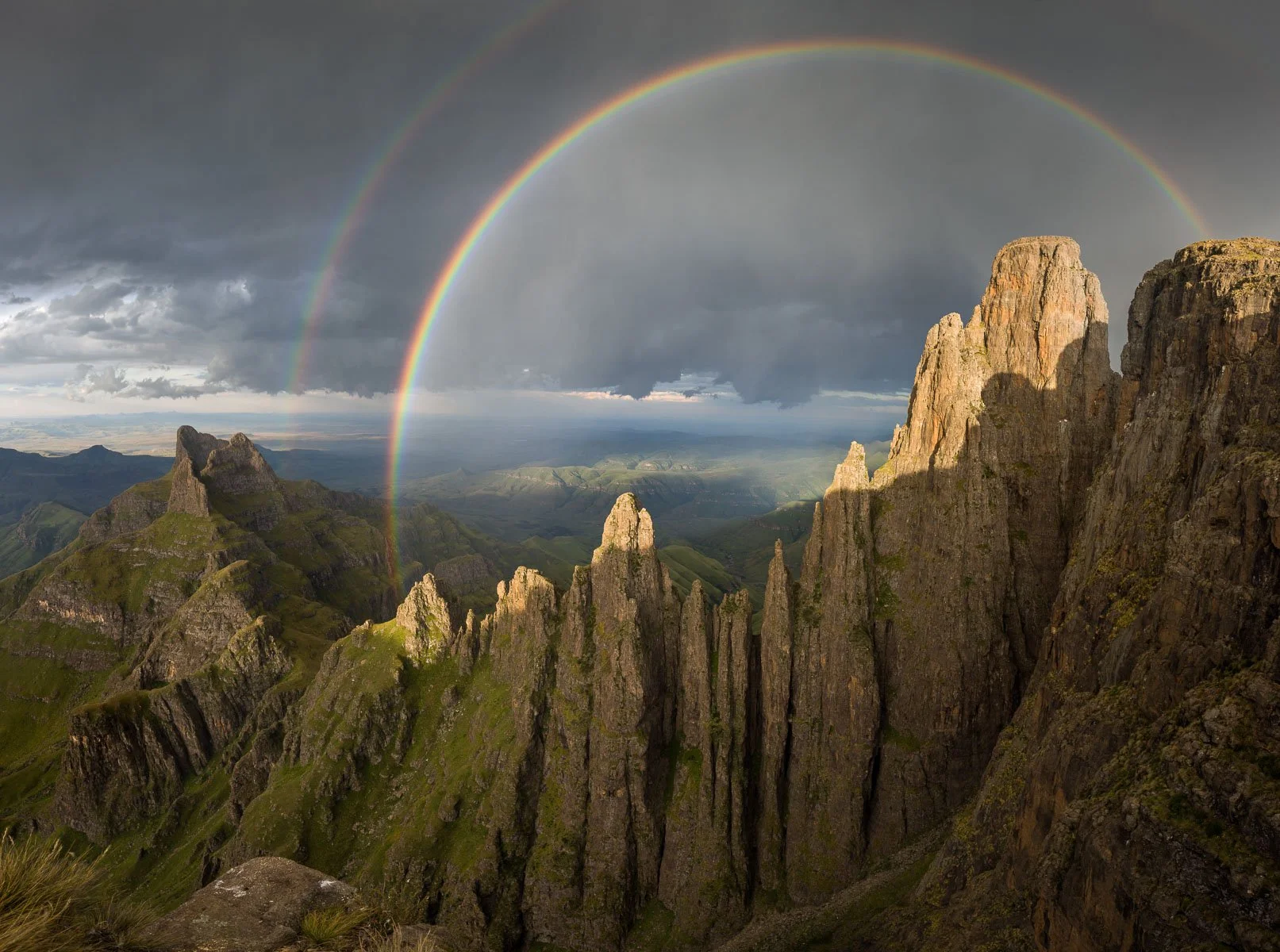
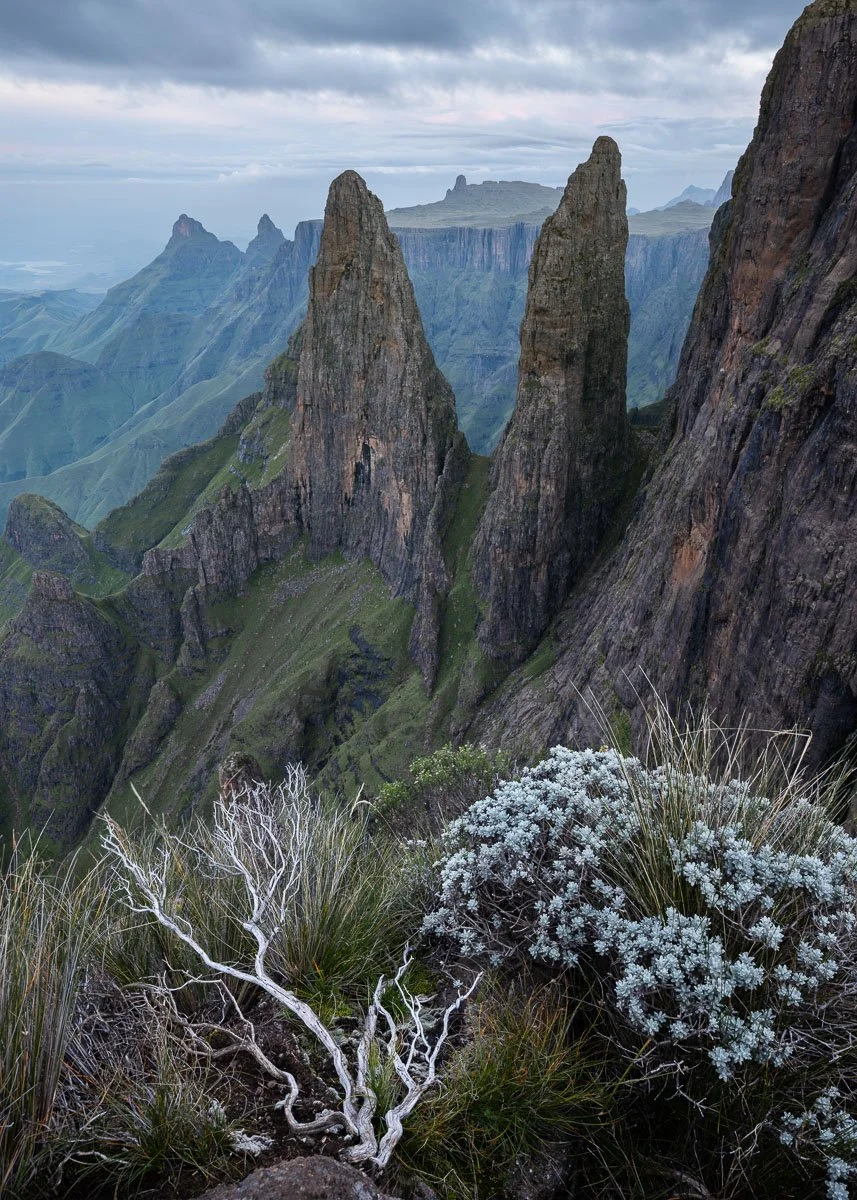
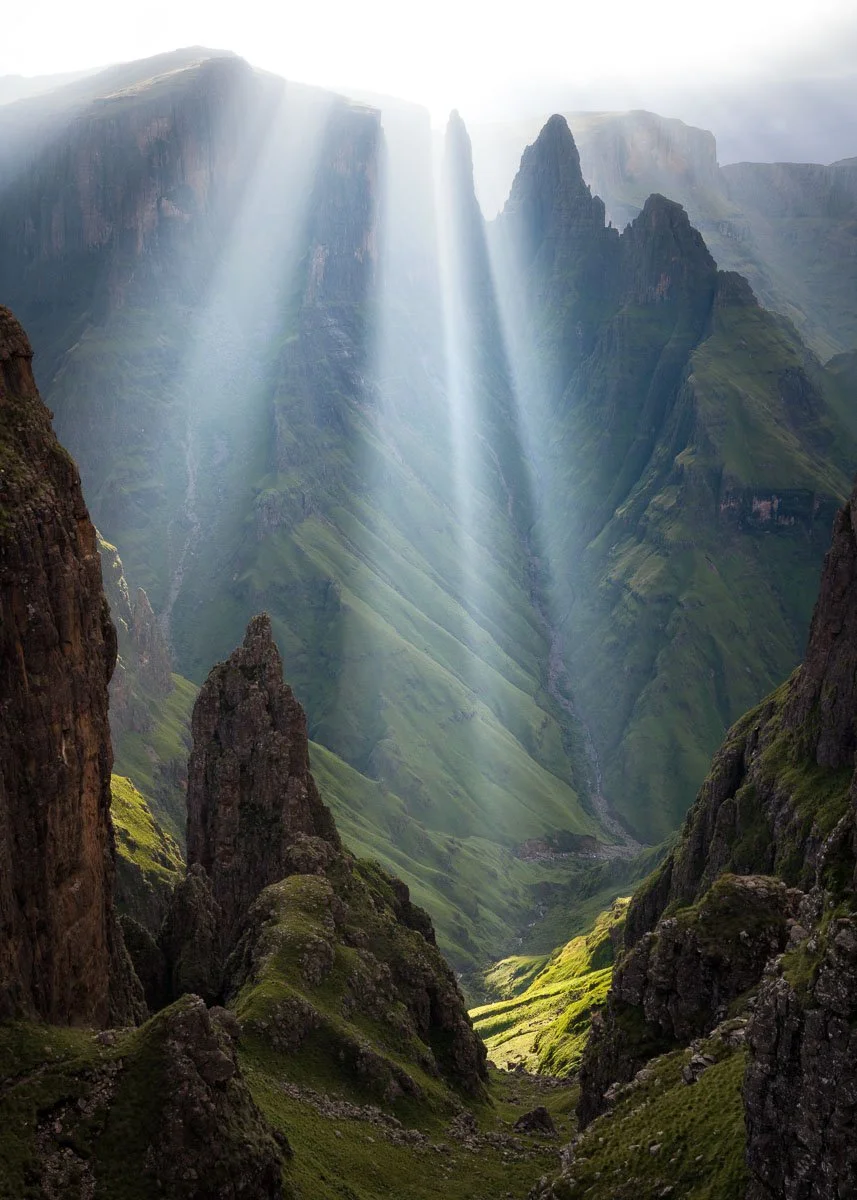
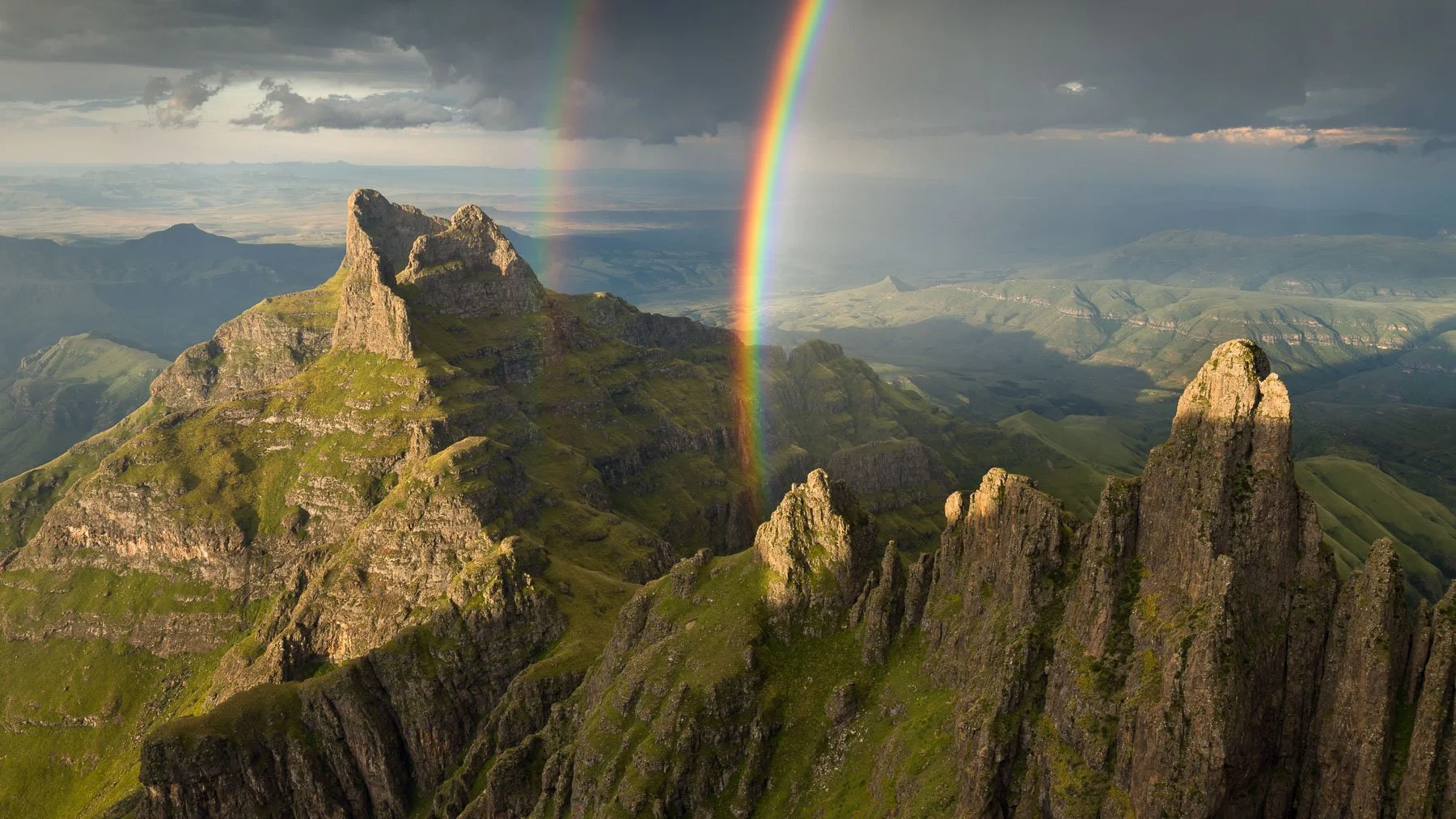
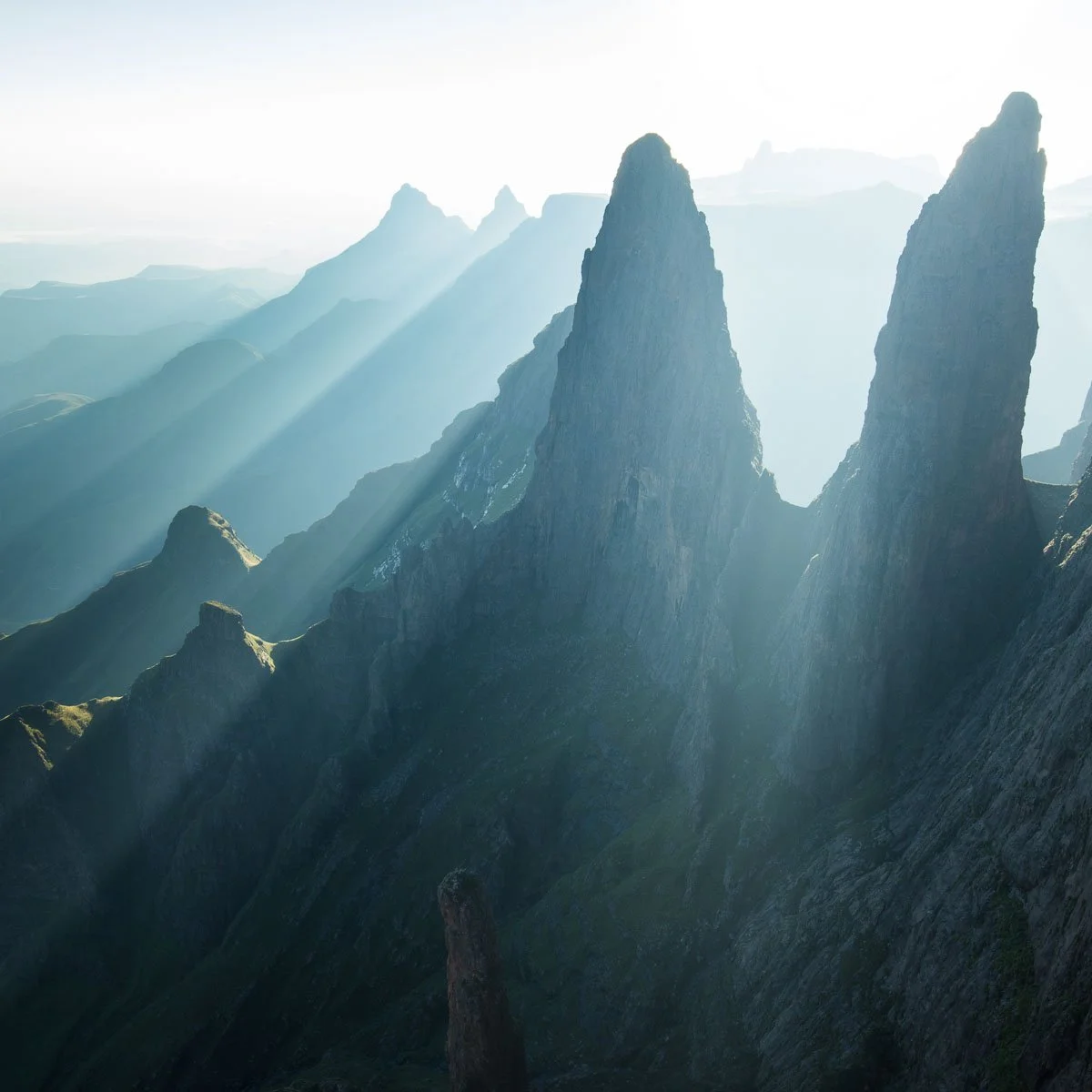
The Drakensberg, or “the Dragon Mountains” in Afrikaans, is an appropriate name for this vast 3,000-meter wall of peaks in the centre of South Africa. It’s an almost impossible landscape of pinnacles, ridges, and sheer cliffs, and one of the most dramatic and remote regions in southern Africa. It’s wilderness in the true sense of the word, and a place that very few people get to experience.
For this workshop, we’ll spend four days camping and exploring at the top of this escarpment in the Mnweni area, immersed in these incredible peaks and ridges, discovering its finest views, and enjoying true adventure. Camping allows us to set up in the best shooting locations, so we can photograph right next to where we sleep and eat. The area is so remote that there are no roads, and it takes two days to hike in—but we’ll fly in and out by chartered helicopter, allowing us to take everything we need for our camp, as well as avoiding the time and effort required to ascend to the 3,000 m ridgeline. While there, we’ll be supported by a team of experienced local porters and guides who will look after the camp and prepare meals, which we’ll enjoy in a large group tent.
Every participant will have their own individual tent, and camping brings a whole new level to experiencing the landscape. We’ll be away from towns, cars, and crowds—living within the landscape, surrounded by it—which deepens the connection and creates an unforgettable experience. It also allows us to be mobile, so during our time here we’ll move camp to different parts of the escarpment, enabling us to explore and photograph this incredible landscape from a variety of angles.
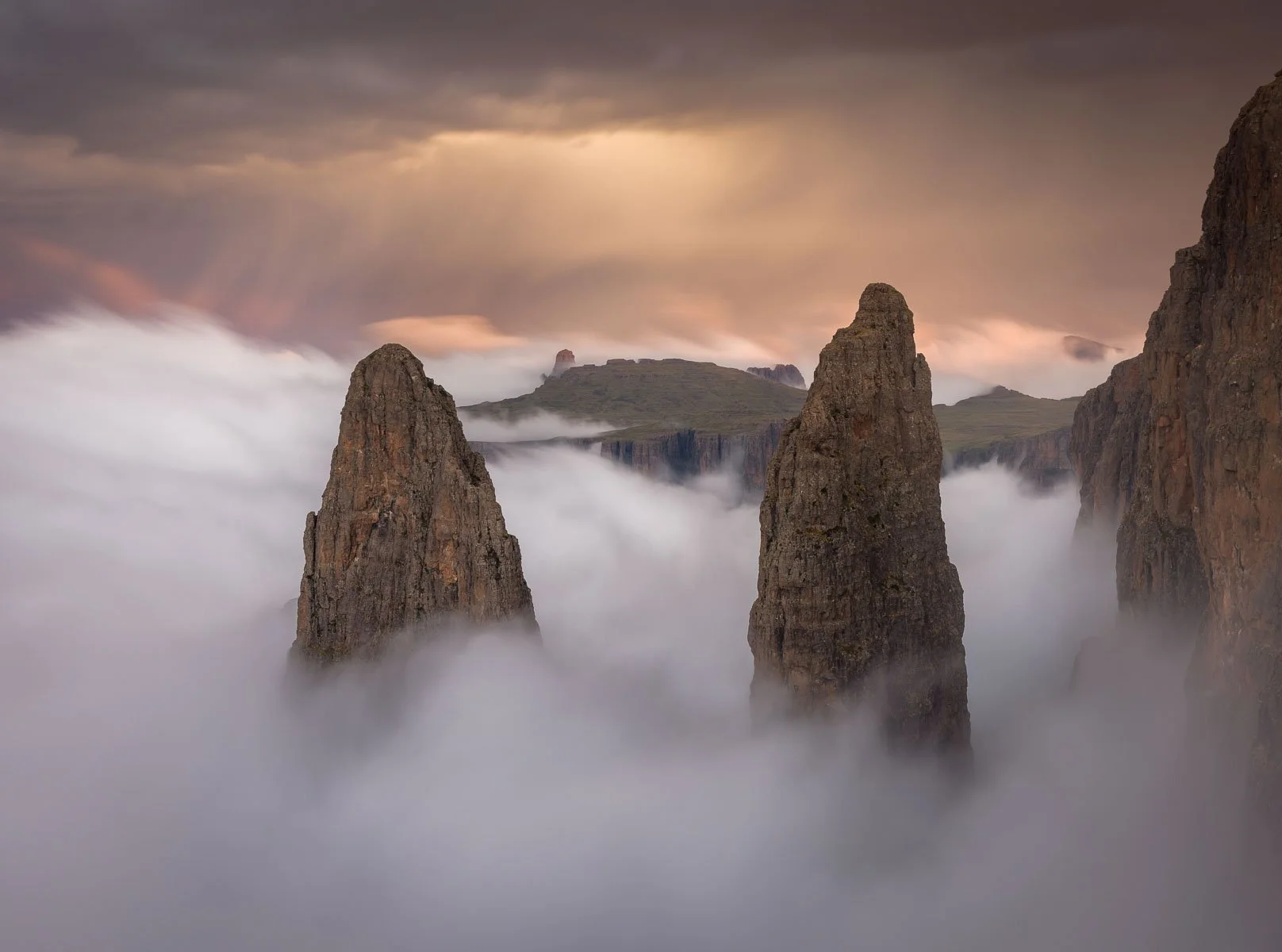
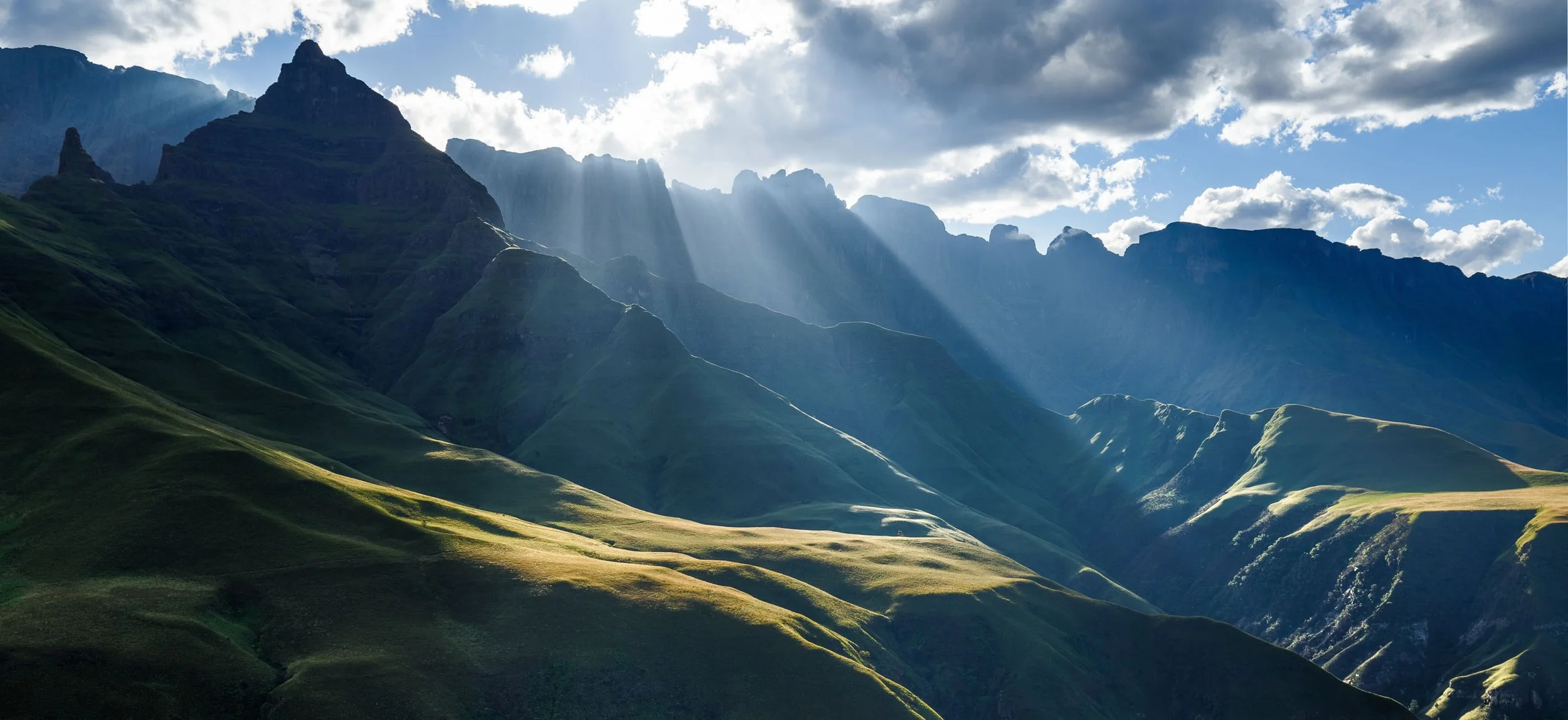
At this time of year, the sudden rise of these peaks creates fascinating weather conditions, with thunderstorms quite common in the afternoons, bringing dramatic light and clear air with them. The mornings are often calmer, with cloud inversions obscuring the valleys and leaving just the peaks towering above the clouds.
Additiionally, for this tour we’ll do more than camp on the escarpment.. We also want to show you the stunning valleys that make up the Drakensberg, so we’ll spend the remainder of the trip in Cathedral Peak Valley and Royal Natal National Park. From here, we’ll gain a different perspective—looking up at the wall of peaks and finding compositions among the trees and streams that flow through the area.
It also means that after our nights camping, we’ll have a comfortable bed and a proper shower to look forward to at Cathedral Peak Lodge. It will also provide a relaxed environment for sessions on editing and image critique.
This workshop balances genuine adventure with space to slow down, observe, and fully engage with the landscape, the light, and the moment. For me, the root of all photography is experience, and this is an experience like no other—a genuinely unique landscape photography workshop. Group size is limited to 9 participants, with three guides, ensuring plenty of one-on-one tuition in the field. As described above, we’ll also be supported by a team of local guides and porters, allowing you to focus entirely on photography while we take care of everything else.
All images © Alex Nail
PRICE
$11,900 USD
(Price includes single occupancy)
GROUP SIZE
9
EXPERIENCE
Amateur, enthusiast and semi-pro photographers.
PHYSICAL DIFFICULTY:
You do not need prior backpacking experience to come on this trip however you should be walking fit, capable of walking with a light backpack across uneven ground, and free from injury. See “A word about hiking and camping” section below.
INCLUDED IN THE PRICE
All ground-transport from Johannesburg to the Drakensberg and back.
Charter helicopter flight with from Cathedral Valley to the Mweni area and back down again (weather permitting)
All accommodation in hotels and tents
Individual tents for the camping section
All meals and all beverages (excluding premium wines and liquors)
3 x Guides (max 3:1 client:guide ratio)
Continuous assistance with your photography and editing
All park permits and fees
NOT INCLUDED IN THE PRICE
Airfare to and from Johannesburg (South Africa)
Premium beverages and snacks
Sleeping bags and sleeping mats
Credit Card surcharges
Travel Insurance
ITINERARY
ITINERARY
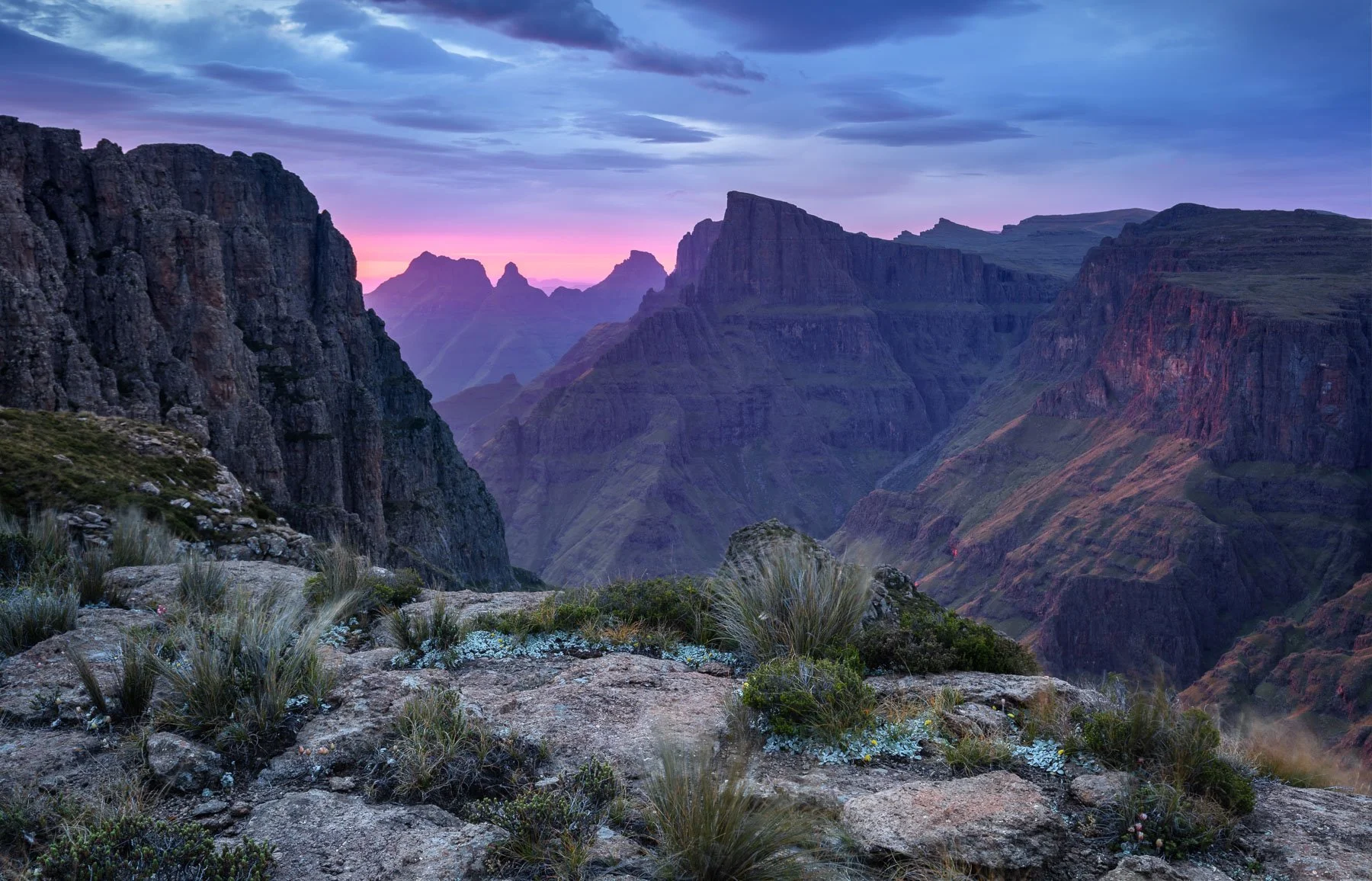
This tour sees us staying in three primary locations: camping on the Mnweni area on the Drakensberg Escarpment, a lodge in Cathedral Peak Valley, and chalets in Royal Natal Valley. This trip comes with the challenge of relatively unpredictable mountain weather, which can affect the helicopter transfer up to the escarpment. As such, we’ve built flexibility into the itinerary in terms of which nights we stay where, ensuring we get 3–5 nights camping in the Drakensberg peaks, with the remainder of our time split between the scenic Cathedral Valley and Royal Natal National Park.
So this isn’t a day-by-day itinerary, but instead focuses on the different bases and what we’ll see in each location.
DAY 1 | ARRIVAL
This tour will start with an arrival night in Johannesburg. We’ll spend our first night in an airport hotel, where we’ll have our welcome dinner, a briefing on what to expect during the upcoming tour, and a chance to get to know each other. On the morning of Day 2, we’ll begin the six-hour drive to Cathedral Peak, a lovely old colonial-style hotel in the Cathedral Peak Valley.
3-5 DAYS | DRAKENSBERG ESCARPMENT CAMPING
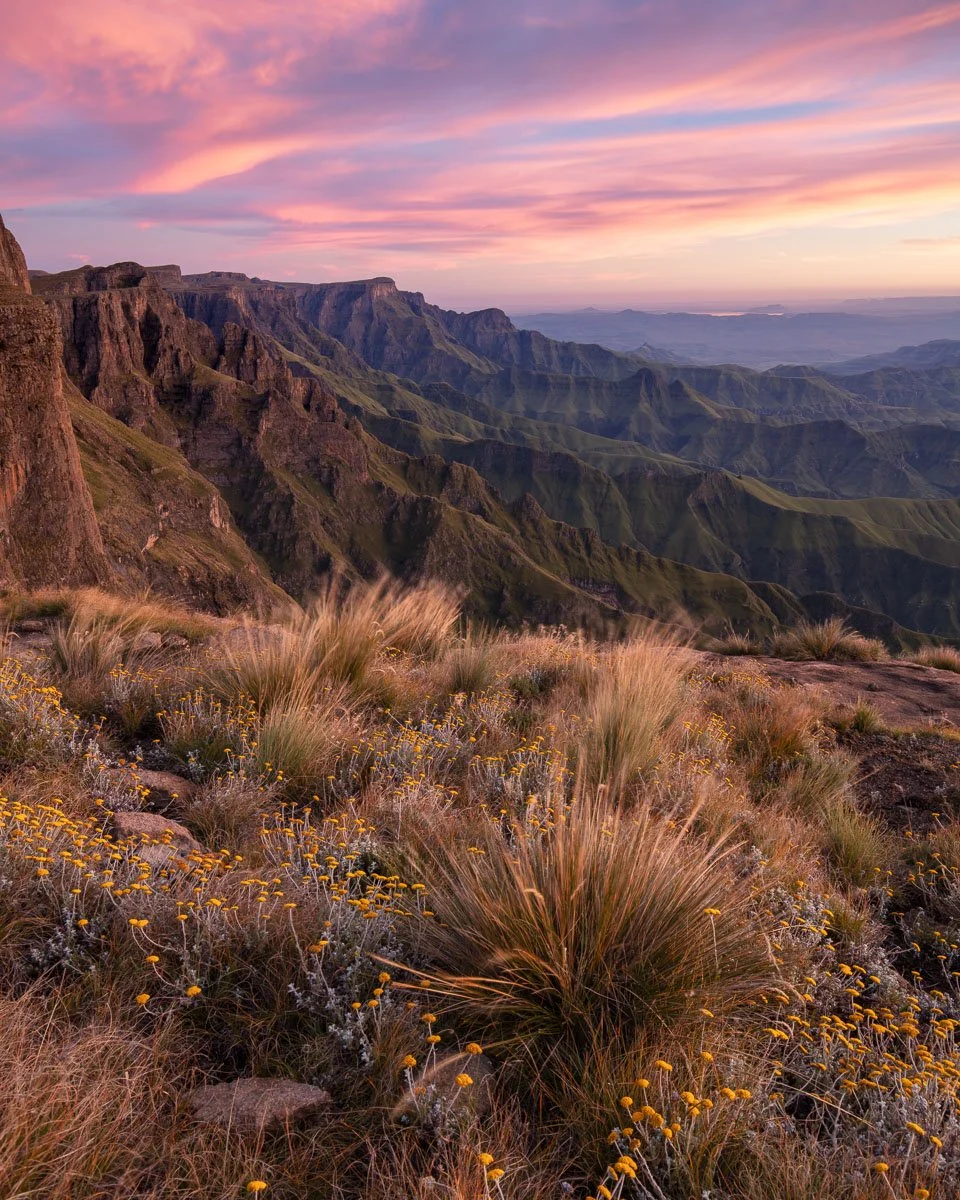
Weather permitting, we’ll make the short helicopter transfer from Cathedral Peak Valley to the top of the Escarpment. Once there, we plan to stay for a minimum of three nights and up to a maximum of five nights. Our camp is located at the head of Rockeries Pass—the source of South Africa’s Orange River—with an incredible view down the pass. In our opinion, this is the most breathtaking part of the Drakensberg Escarpment and offers countless viewpoints within a mostly flat 30-minute walk.
This includes Rockeries Pass, Mponjwana, the Mnweni Needles, the Mnweni Cutback, Mnweni Pass, and The Mnweni Pinnacles. Each of these is a perfect location for sunrise or sunset photography. Alongside spectacular mountain scenery we will have the opportunity to visit two cape vulture colonies and capture the graceful birds that make the Drakensberg their home. For those interested in cultural photography, there are also roaming Basotho herders, who make for fantastic environmental portraits.
On arrival atop the Escarpment, our camp will already be set up thanks to the local hiking operator with whom our guide, Alex Nail, has worked for years. Each participant will be provided with their own premium one-person hiking tent, designed to withstand severe weather. There will also be a large mess tent for social dinners and the occasional card game. We’ll also have a chemical toilet in a small tent for those who prefer not to use the bush.
While at the top, we will likely move camp for one night, hiking to the incredible Mnweni Pinnacles—two gigantic rock monoliths. This is an easy hike of about four hours across mostly flat ground, and we’ll be supported by Zulu porters who will transport the tents, sleeping equipment, and food. We’ll only need to carry our camera gear, clothing, wash kit, and other essentials.
At the end of our time camping here, we’ll return to Cathedral Peak Valley by helicopter during a suitable weather window.
1-2 DAYS I CATHEDRAL PEAK VALLEY
Our time here will be spent in a beautiful traditional, fully inclusive, country lodge with doorstep views of the Cathedral Valley, offering the chance to sleep in a proper bed and enjoy a hot shower after our days camping on the Escarpment. As we’ll be here both before and after the camping portion of the trip, we’ll be able to leave additional luggage safely at the hotel. Extra clothing, as well as items such as laptops, can remain here and be collected upon our return.
The area also offers incredible photographic opportunities, including lush green valleys, diverse flora, views of the Escarpment above, and beautiful forested river gorges and waterfalls.
While here, we’ll also aim to schedule an image processing session, covering topics such as working with contrast and colour, as well as blending multiple exposures.
3 DAYS I ROYAL NATAL NATIONAL PARK
On Day 7, we’ll make the two-hour drive from Cathedral Peak Valley to Royal Natal National Park. This incredible valley offers stunning views of the Amphitheatre Wall, with a variety of foregrounds located just a short walk from the accommodation.
During our stay, we’ll be based in chalets. As there are no restaurants within the park, we’ll have our own chef preparing excellent South African meals for us while we relax, photograph, and spend additional time on image editing or critique.
For those keen to explore further, there is the Tugela River Gorge hike, which follows a scenic valley and ends in a striking marble slot canyon. There are also other hikes through forested valleys leading to a variety of beautiful waterfalls.
DAY 11 | Departure Day
On the final day, we’ll enjoy a last breakfast before heading back to Johannesburg. The drive takes approximately six hours, so departing at 9h will allow arrival in time for flights from 17h onwards. If you plan to depart the following day, there are many airport hotels available to choose from.
A WORD ABOUT HIKING & CAMPING
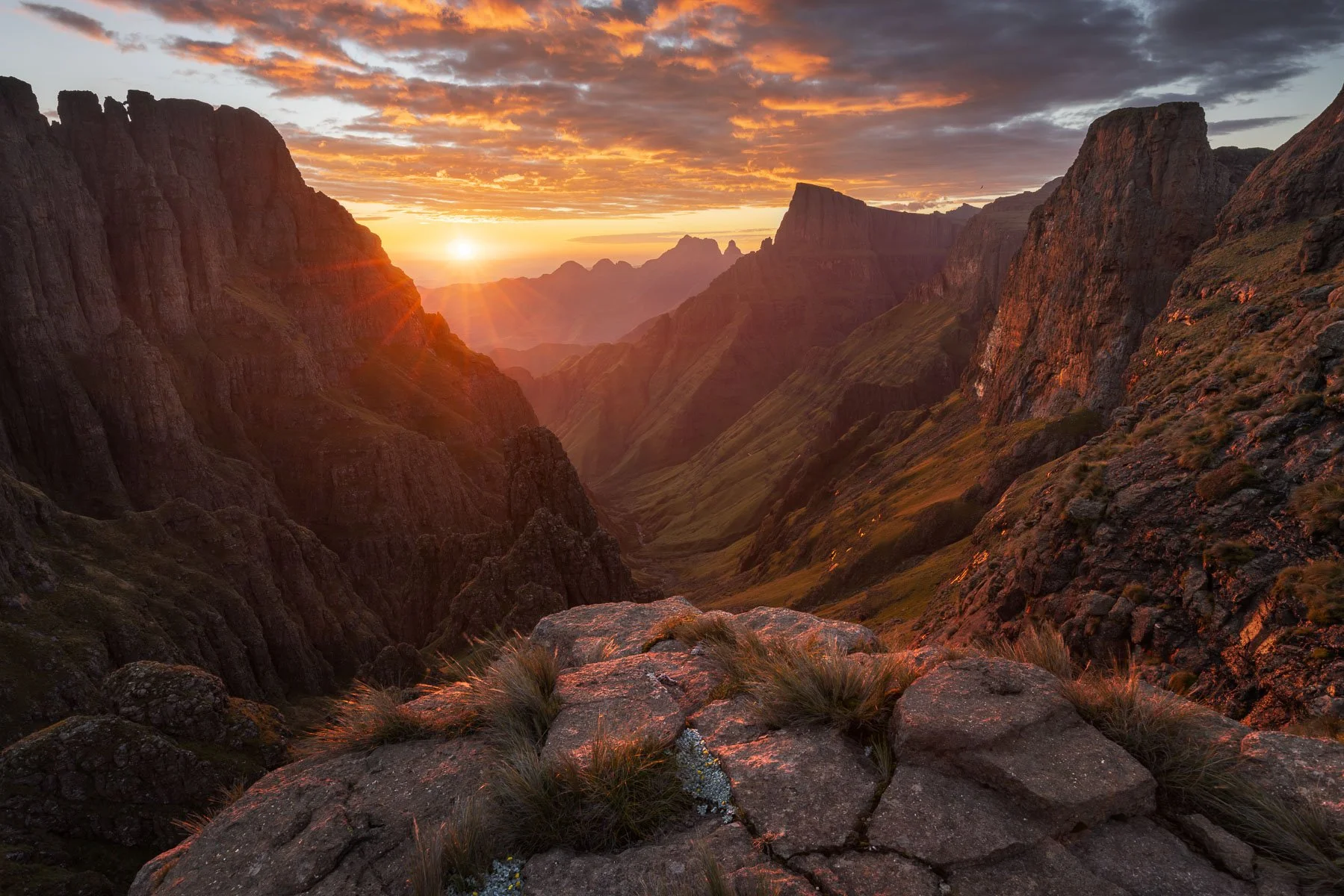
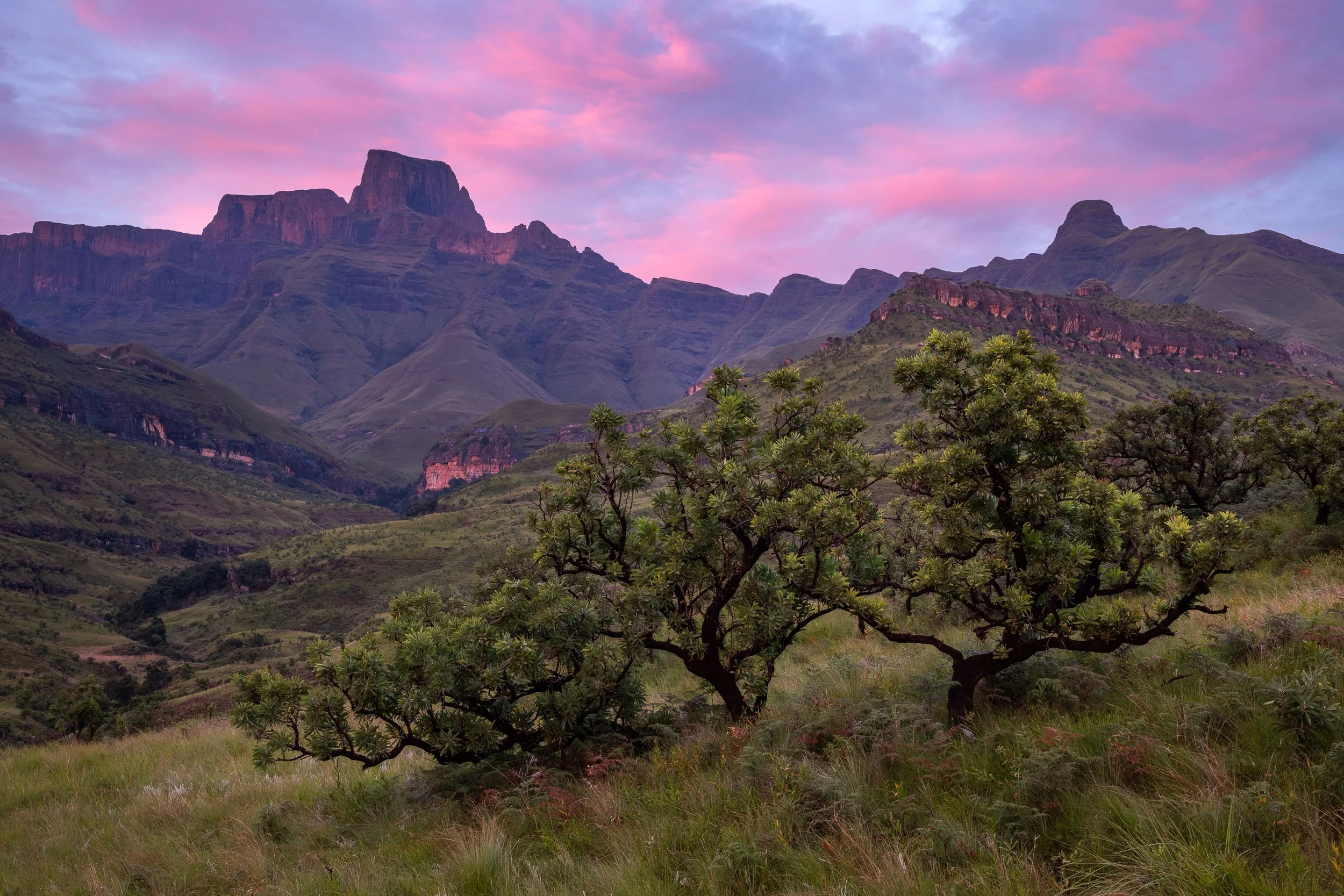
While we use helicopters and part of this trip takes place in the valleys of the Drakensberg, the main portion occurs on the Drakensberg Escarpment, which is a remote mountain environment. There are no roads, hotels, or conveniences, so we will be wild camping. We use local porters who will carry the tents, sleeping equipment, and most of the food, but participants will need to carry their photography gear, spare clothing, a wash kit (toiletries, sunscreen, any medication, etc.), as well as their lunch or snacks and water for the trek.
When we move camp we’ll need to carry this gear for a hike of around four hours across uneven ground. While there will be little in the way of elevation gain, we will already be at 3,000m, so any exertion will feel significantly harder. There will also be hiking across uneven ground to reach some of the shooting locations we’ll visit.
Although we can be almost certain of our helicopter pickup, it is only sensible on our part to make sure the group can walk off the mountain if absolutely necessary. In this case, we would need to hike back down to the valley. This is a challenging, but not technical, five-hour hike descending approximately 1,500 m. Participants will not need to carry any gear, as the porters will transport it for us.
It is extremely unlikely that this will happen, as we have a highly flexible return window and the weather is generally stable. However, the possibility does exist, and participants must be physically capable of completing the hike if required.
CAMPING
Camping up on the Escarpment allows us to sleep nearby the incredible locations that we’ll be shooting at sunrise and sunset. It’s a wonderful experience which always bonds groups, but it does bring different challenges to staying in a hotel. We provide high-end tents more than capable of keeping you comfortable and dry in any weather we may encounter for every participant, however note that these are single man tents which don’t allow for huge amounts of space. The normal expectation for an average day in the Drakensberg is good weather from dawn until perhaps 13h where showers can pass through, and we might be sharing our large mess tent which is big enough for the whole group and where we’ll have meals, until the rain passes. Most of the time through we will be outdoors and it is very common to have weather good enough to stay outside all day, only using our tents when we go to sleep.
While we provide tents, clients must bring their own sleeping bags, sleeping mats and pillows. After signing up we’ll be able to give you guidance on what you should buy and bring with you.
As mentioned above in the itinerary, we will have a toilet tent, but people will also be free to walk away from the camp and go to the bathroom “wild”. There won’t be a shower, but there will be water for washing hands and cleaning teeth, and in the evenings we will have hot towels to wipe our faces and have a bit of a refresh. There is also a nearby river providing wonderful bathing opportunities. In the afternoons the water temperature can be lovely and swimming there can be one of the highlights of the tour.
At the end of the camping trip we’ll arrive back at our lodge in the valley, with incredibly comfortable rooms and where you can enjoy a shower after our days in a tent. As we’ll be staying in this hotel both before and after our time on the Escarpment, we’ll be able to leave additional luggage there where it will be kept safe. So extra clothing, as well as things like laptops can be left and collected when we return.
On sign up we’ll give far more details about the specifics of the camp, but if you have any questions at all, don’t hesitate to contact me via email.
SOME OF THE WILDEST & MOST REMOTE LANDSCAPES YOU’LL EVER SEE
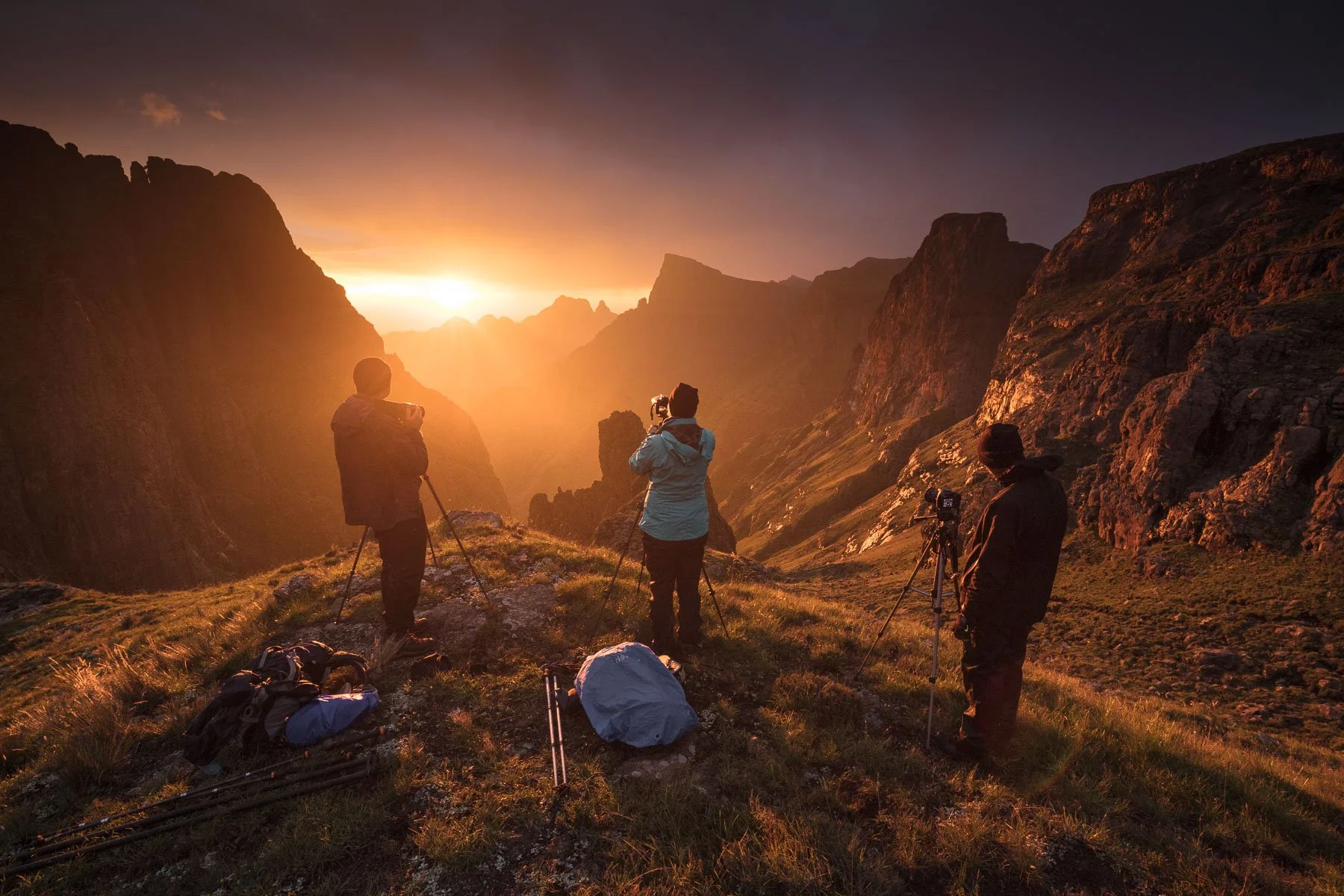
Finding unique and rarely photographed landscapes is difficult nowadays. The Drakensberg, however, remains relatively untouched, and any images you see from there are usually taken from the valleys rather than atop the Escarpment. The reason for this is the challenge of getting there. It takes a couple of days to hike in, you need to carry all your gear, and local guides are essential.
This is a trip we’ve wanted to run for a number of years. Hougaard is a native of South Africa, and it’s one of the most beautiful landscapes in the country, so we partnered with our old friend Alex Nail, who has been running guided backpacking trips along the Drakensberg for more than a decade, to see if we could create a trip that eases some of the logistical and physical challenges of reaching the top of the Escarpment. Our Zulu guide, team of porters, and Alex have guided tours here throughout the seasons, so we will have the full security and support of the most experienced team in the Drakensberg
We believe the result is a truly unique workshop experience that places you right in the heart of one of the most breathtaking and untouched landscapes on Earth. We also believe that the best landscape photography is born from experiences that connect you deeply with nature, and spending time camping on the Drakensberg Escarpment, looking out across peaks, pinnacles, and sheer cliffs, is an experience that will stay with you forever.
This workshop then, is an opportunity to experience, to be surrounded by and to photograph wilderness landscapes at their most pristine and awe-inspiring.
WHAT WE DO (AND WHAT WE WANT YOU TO GET FROM OUR WORKSHOPS)
OUR AIMS
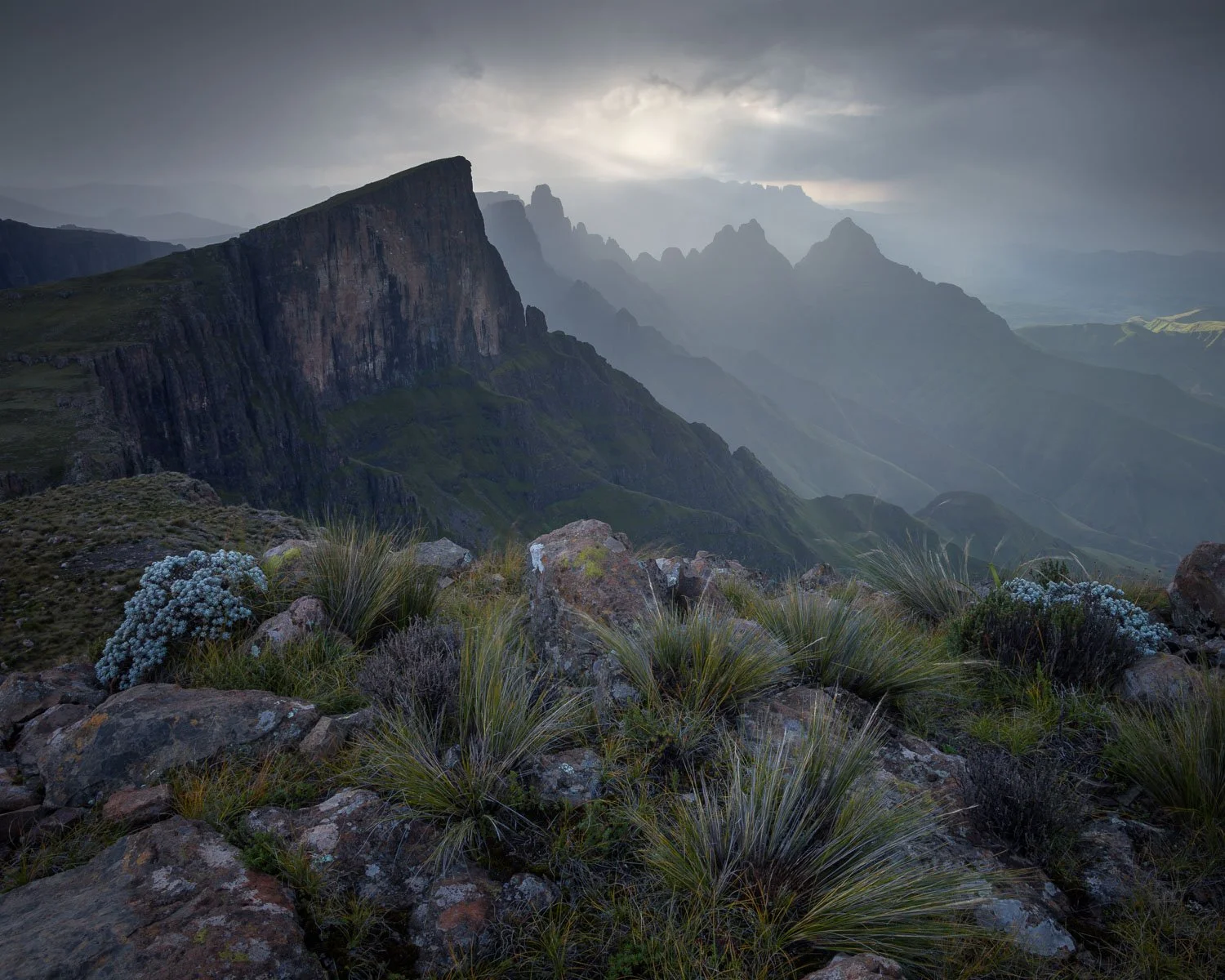
The aim of all our workshops is to take you to beautiful locations and give you every opportunity to get great images while improving your technique over the course of the workshop. We limit the number of participants on our workshop which gives us plenty of time with everyone in the field and from the beginning of your time with us we can identify your photographic level and what you’d like to focus on. We can then tailor the sessions to your precise needs and provide each participant with plenty of one-to-one tuition in the field, and as we’re camping right next to our shooting locations, you’ll have immediate opportunities to put what you’ve learned into practice.
THE EXPERIENCE
We want to share with you our passion for nature and landscape photography in this incredible place. We aim to build a great learning environment where people feel comfortable together and at ease with asking questions, making the absolute most of the trip. We aim to make your experience here in the beautiful landscapes of the Drakensberg a memorable one and a trip from which, as well as getting some great images from amazing locations, you’ll also go home having had a true adventure with great company in a very special place.
SOME OF THE TECHNIQUES COVERED IN THE WORKSHOP
Understanding the light and choosing the best exposure
Composition. Balance and harmony, leading lines and creating depth.
Lens choice. From the wide-angle vista to shooting landscape abstracts with a telephoto lens
Mountain photography
Shooting multiple image panoramas
Controlling light in scenes with a wide dynamic range
“Seeing a scene”
WHAT TO BRING
A dSLR or mirrorless camera
The criteria for the kind of work we’ll be doing is a camera that can be operated completely manually to ensure we get the best exposure with interchangeable lenses allowing us to cover a range of focal lengths
Lenses
You need to cover a focal range of 16-400mm, or 10-300mm with APSC . If you are a keen bird photographer, then it will be worth bringing your 500/600mm along for this trip as well.
Filters
Graduated filters aren’t a necessity, but if you own a set, you can bring it along.
A circular polarizer, especially for your 70-200mm/100-400mm will help deal with haze a lot.
Tripod
We’ll be shooting in low light and possibly windy conditions, so a godo tripod is a necessity, but this is an area that a lot of people neglect in favour or flimsy travel style tripods. If you do not own a high quality tripod, please enquire about renting one from us. This also saves you the effort of having to fly with a tripod.
Backpack
We will be doing a lot of walking with camera gear, so it is critical that you have a comfortable backpack that can take your camera gear, a bottle of water, your clothing and some food (lunch or snacks). Size really depends on how much photography gear and clothing you bring, but the minimum is 38 litres, with 40+ being more practical.
The Guides
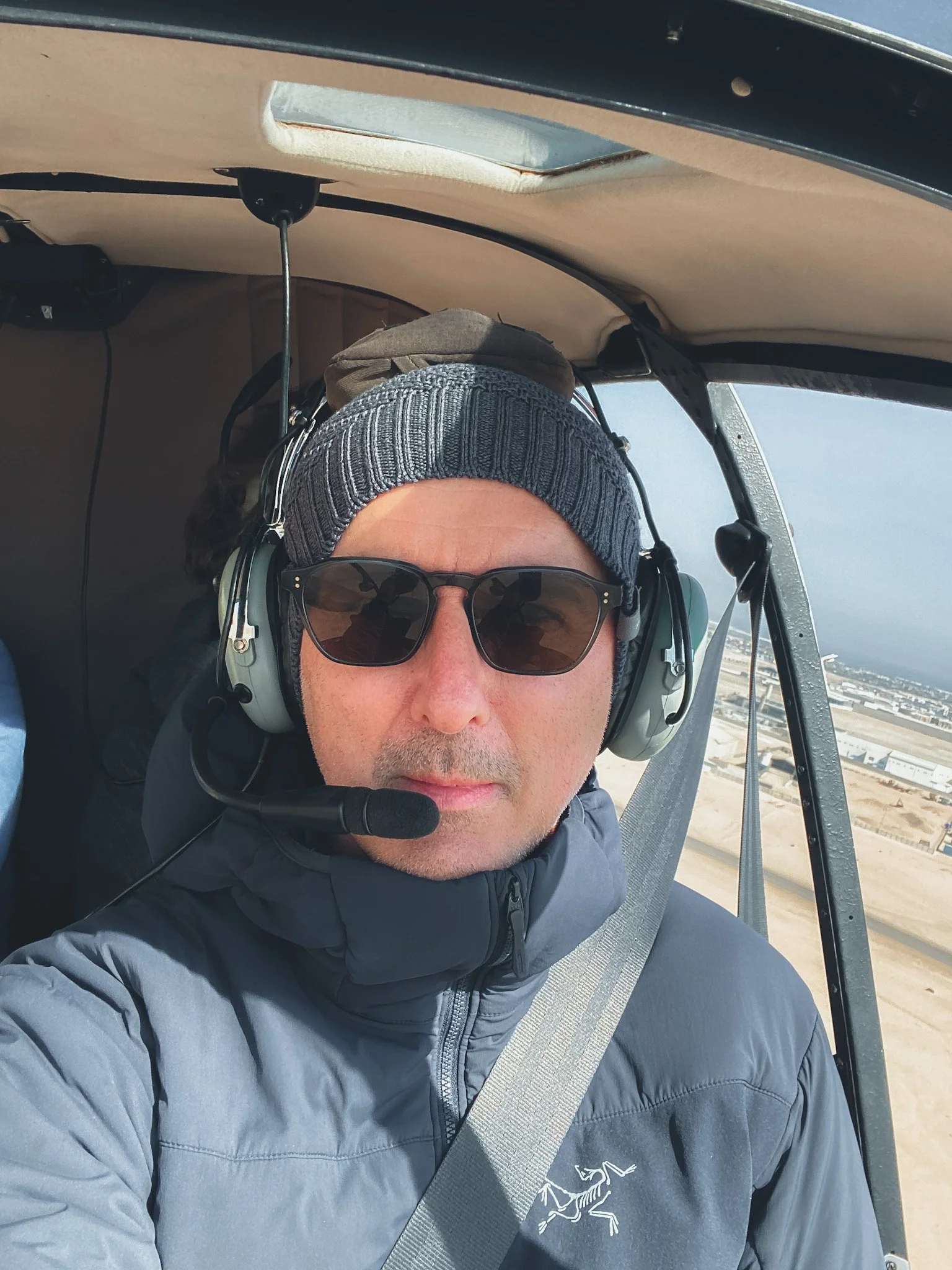
ANDY MUMFORD is a Lisbon based professional landscape and travel photographer. Andy grew up in the UK loving nature and travel and took up landscape photography over fifteen years ago. Since then he has travelled extensively photographing all over the world and his photography and articles have featured in publications and books worldwide. He is a passionate photographer teacher and has been leading both group and one-to-one workshops for over five years.
Andy believes that the core of all good landscape photography comes from experiences where we connect deeply with nature, where the landscape fills us with a sense of wonder and awe, and has spent the last twenty years chasing those moments.
He is a Fuji X Photographer and a brand ambassador for Fujifilm in Portugal, although he also has extensive experience with Nikon and Canon cameras.
.
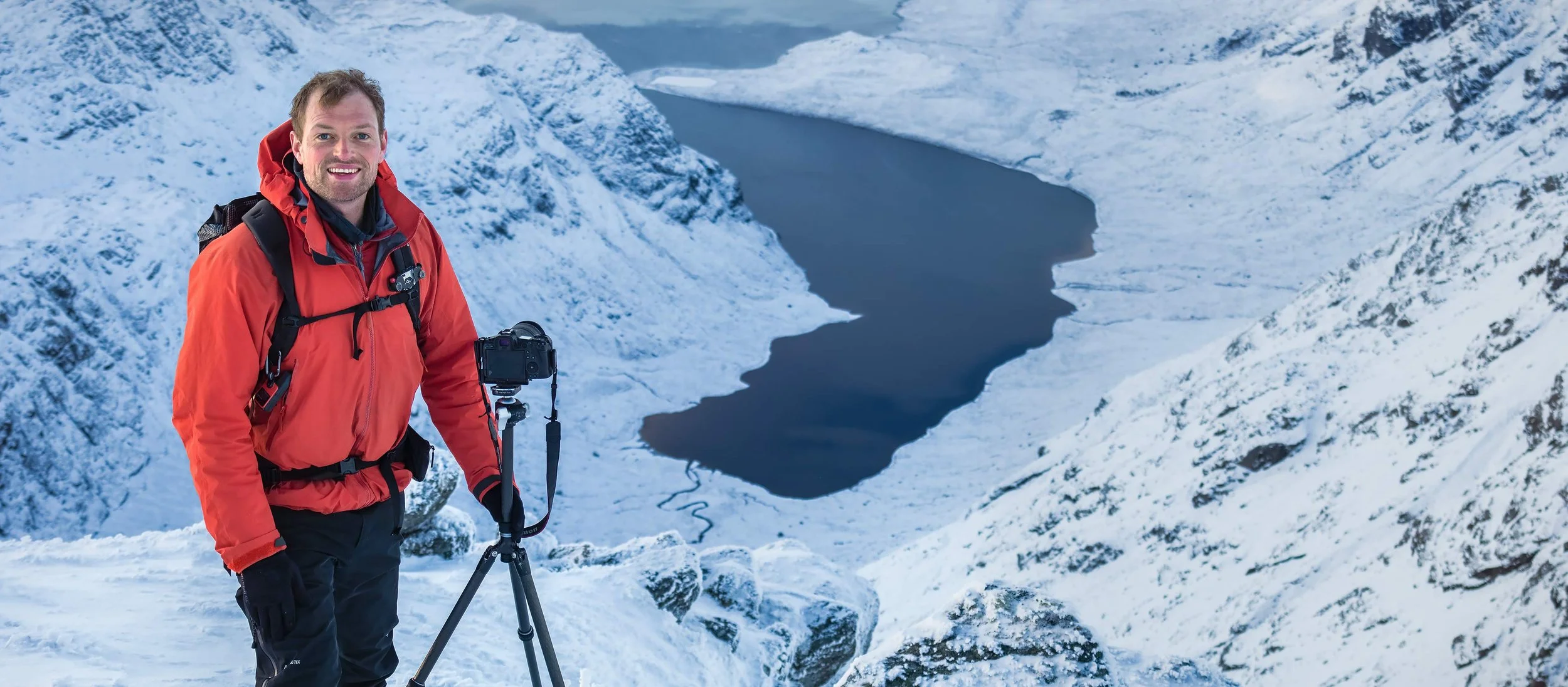
Alex Nail is a full-time landscape photographer known for his mountain and wilderness images. His photography is largely illustrative, regularly depicting spectacular scenery in sublime lighting conditions. He is a Fellow of the Royal Photographic Society, where he serves on the distinctions panel assessing other photographers for the society’s highest awards.
Alex is a qualified Mountain Leader and a keen backpacker, often venturing into the mountains for a week or more at a time, regularly summit camping to be on location when the light is best. He builds his portfolios through a project-based approach and generally returns to the same areas repeatedly to develop an in-depth appreciation, which is then reflected in his images.
He is one of the co-founders of the Natural Landscape Photography Awards, a major international photography competition that aims to promote and reward photographers who take a truth-to-nature approach.

Hougaard Malan is an award winning South African photographer who has been guiding and organising photo tours for a decade. His photos of Namibia have won him awards like the 2016 International Landscape Photograph of the Year and his clients have also won numerous awards with the photos captured on his tours.
Hougaard believes the essence of a landscape photograph is allowing the viewer to experience that place without ever being there. When the light, clouds and land combine to produce scenes so beautiful that they etch a profound place in viewers’ memories, and witnessing such moments unfold over earth’s most beautiful landscapes is, for me, one of the highlights of living.
Hougaard’s work has been published in countless media all over the world, from books and magazines to calendars and coffee table books by the likes of National Geographic. Licensing and commission clients include global and local corporates like Samsung, Toyota, SAB Inbev, FNB, Standard Bank and Europcar.
REGISTRATION
To secure your reservation a deposit of $3000 is required at the time of booking. Please complete the form below for more information, and check our terms & conditions linked below